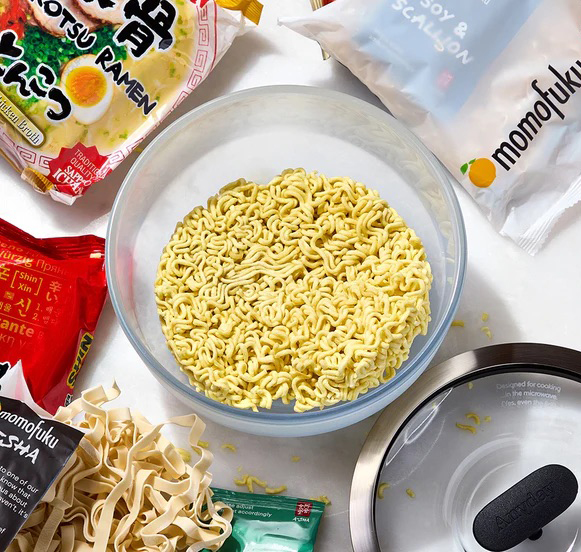
Noodles can be made from different kinds of flours, such as wheat, rice, and buckwheat flour. For instant noodles, flours that have 8.5–12.5% protein are optimal because noodles must be able to withstand the drying process without breaking apart, which requires a higher amount of protein in flour, and during frying, high protein content can help decrease the fat uptake.[17] Gluten, which is made up of glutenin and gliadin, is the most important wheat protein that forms the continuous viscoelastic dough of noodles.
The hydration of dough determines the development of gluten structure, which affects the viscoelastic properties of dough. The water absorption level for making noodles is about 30%–38% of flour weight; if the water absorption level is too high, hydration of flour cannot be completed, and if the water absorption level is too low, the dough will be too sticky to handle during processing.[17] For instant noodles, dehydration is an important step after noodles are made because water can offer a hospitable environment for microorganisms. The USDA uses different regulations of moisture content, depending on dehydration method: for instant noodles dehydrated by frying, moisture content cannot exceed 8%, and for those dehydrated by methods other than frying, moisture content cannot exceed 14.5%.
Salt is added when making the flour dough to strengthen gluten structures and enhance the sheeting properties of dough, and it can make the noodles softer and more elastic. Salt also offers the basic salty flavor of noodles and can mask flavours generated by flour and processing. Another function of salt is to slow down the activities of enzymes, such as proteolytic enzymes, which could interrupt the gluten structures and microbial growth. Alkaline salt, such as sodium and potassium carbonates, could be added to noodle dough to enhance the yellow color of the product if needed because flavonoid pigments in flour turn yellow at alkaline pH levels, and the increase of pH could also influence the behavior of gluten, which could make noodle dough even tougher and less extensible (for some noodles, such as Japanese ramen, this is wanted). For making fresh noodles, the amount of salt added is 1–3% of flour weight, but instant noodles require higher salt content due to longer shelf life.[17] One pack of ramen contains well over half the daily recommended amount of sodium.
Kansui, an alkaline solution consisting usually of a 9:1 ratio of sodium carbonate to potassium carbonate, is added to the flour and water when making ramen to help develop several of its unique characteristics.[20] The addition of kansui aids in the gluten development of the noodle as well as promotion of gelatinization of starches, both of which contribute to the springiness and chewiness characteristic of ramen.[21] Additionally, the addition of kansui enhances the yellow color of ramen noodles by bringing about a chromophoric shift of several compounds called flavonoids that are inherent in wheat flour.
Frying is a common dehydration process for producing instant noodles. According to USDA regulations, oil-fried instant noodles should not have fat content higher than 20% of total weight. However, the amount of oil could increase during the frying process. Palm oil is chosen as the frying oil for instant noodles due to its heat stability and low cost. Due to their high fat content and low moisture content, instant noodles are highly susceptible to lipid oxidation, and relatively high amount of preservatives are added. Hence, to avoid the generation of off-flavors and health-risking compounds, some instant noodles are dehydrated by ways other than frying to reduce fat content. According to the USDA, non-fried instant noodles should have a fat content lower than 3%
Potato starches are commonly added to instant noodles to enhance the gelling properties and water-holding capacities of noodles. Polyphosphate is used in instant noodles as an additive to improve starch gelatinization during cooking (rehydration), to allow more water retention in the noodles. Hydrocolloids such as guar gum are widely used in instant noodle production to enhance water-binding capacity during rehydration and to shorten cooking time. Gums are dispersed in water before mixing and making of noodles dough.